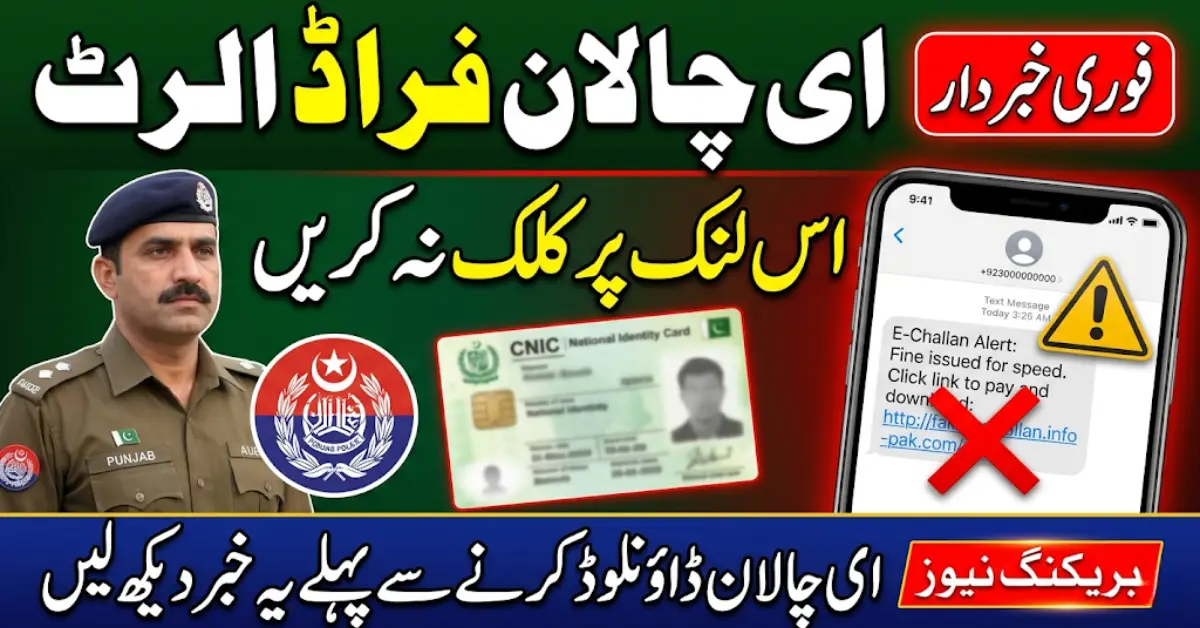
Punjab authorities have issued an important public warning after a surge in fake traffic fine messages circulating across the province. As digital services expand, scammers are finding new ways to exploit citizens. The latest concern? A growing Punjab e-challan scam targeting mobile users with fraudulent SMS alerts.
This alert comes as part of ongoing efforts to protect citizens from cyber fraud and financial loss.
What Is the Punjab E-Challan Scam?
The Punjab e-challan scam involves fake SMS messages that appear to be sent by traffic authorities. These messages claim that the recipient has violated traffic rules and must pay a fine immediately.
How the Scam Works
Scammers use a simple but dangerous method:
-
You receive a message about an unpaid traffic challan
-
The SMS includes a suspicious payment link
-
The link leads to a fake website
-
You are asked to enter CNIC, bank details, or OTP
-
Your personal and financial information is stolen
Punjab Police has clearly stated that official traffic fines are never collected through random SMS links.

Warning Signs You Should Never Ignore
Understanding red flags can help you avoid falling victim to the Punjab e-challan scam.
Common Indicators of Fake Messages
-
Unknown or personal phone number
-
Short or suspicious website links
-
Urgent payment demands
-
Poor grammar or spelling mistakes
-
Requests for payment through unofficial apps or wallets
-
Threatening or aggressive tone
If you notice any of these, do not click the link or respond.
How to Verify Your E-Challan Safely
Authorities advise citizens to always use official channels for verification.

Safe Verification Steps
-
Visit the official Punjab e-challan portal
-
Enter your vehicle number or CNIC
-
Check challan details directly on the website
-
Avoid using SMS links
-
Contact the police helpline if needed
This ensures accurate and secure information.
How to Protect Yourself from Online Fraud
With rising cybercrime cases, taking precautions is essential.
Simple Safety Tips
-
Never click on suspicious SMS links
-
Do not share CNIC, bank details, or OTP codes

-
Block unknown numbers
-
Install trusted mobile security apps
-
Report scam messages immediately
These steps can protect your identity and savings.
Punjab Police Advisory – Key Updates
Punjab Police has issued a strong advisory confirming:
-
Traffic fines are not collected via SMS links
-
Citizens must verify fines through official portals only
-
Panic payments should be avoided
-
Awareness should be shared with others

Authorities are actively tracking cybercriminals and taking strict action.
Why Awareness Matters More Than Ever
The rise of digital services has also increased cyber risks. The Punjab e-challan scam is just one example of how scammers misuse public trust.
Staying informed helps:
-
Prevent financial loss
-
Protect personal data
-
Reduce scam success rates
-
Build a safer digital environment
Conclusion
The Punjab e-challan scam is a serious threat, but it can be avoided with awareness and caution. Always verify traffic fines through official platforms and never share sensitive information through SMS links. A few careful steps today can save you from major trouble tomorrow.
FAQs
1. What is the Punjab e-challan scam?

It is a fake SMS scam where fraudsters send false traffic fine messages to steal personal data.
2. How can I verify my e-challan?
You can check it through the official Punjab e-challan portal using your vehicle number or CNIC.
3. Are traffic fines collected via SMS links?
No, Punjab Police does not collect fines through SMS payment links.
4. What should I do if I receive a fake SMS?
Ignore the message, do not click the link, and report it to authorities.
5. Can scammers access my bank account through this scam?
Yes, if you share your OTP or banking details, scammers can misuse your account.