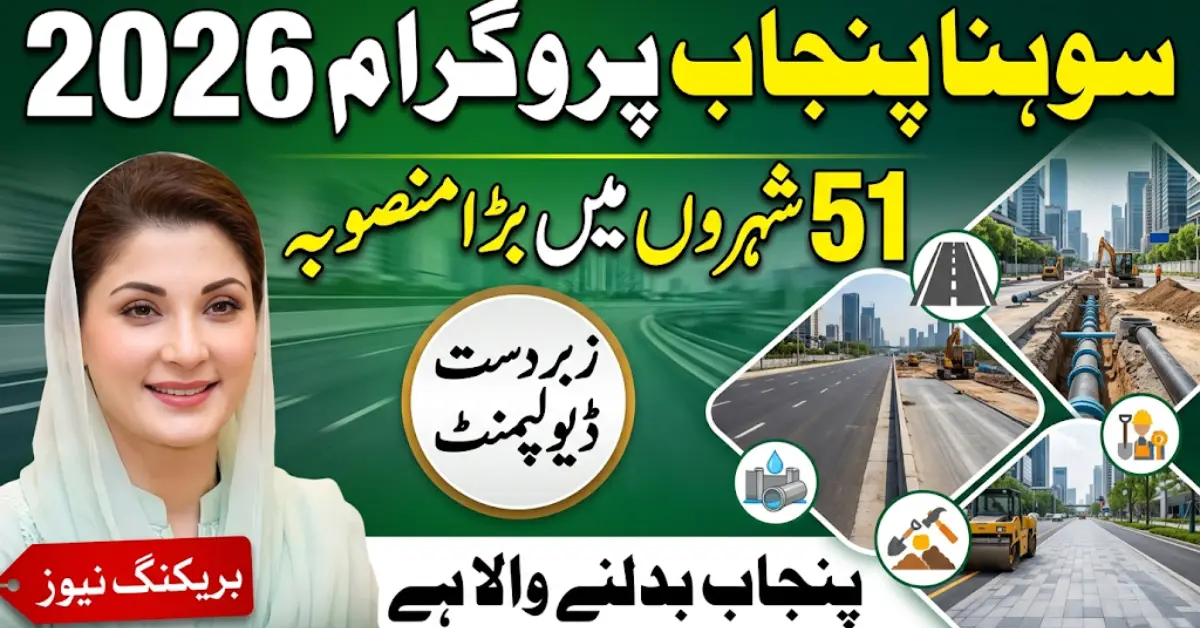
Punjab is set to witness a major transformation as the government rolls out the Sohna Punjab Program 2026, a large-scale development initiative led by Chief Minister Maryam Nawaz Sharif. With a strong focus on urban infrastructure, this program aims to fix long-standing civic issues and improve everyday life in cities across the province.
What is Sohna Punjab Program 2026?
The Sohna Punjab Program 2026 is a comprehensive urban development plan targeting 51 cities in Punjab. It focuses on modernizing infrastructure, improving drainage systems, and introducing advanced water management solutions.
The goal is simple: cleaner cities, better roads, and a more reliable urban system for residents.
Key Objectives of the Program
Transforming Urban Infrastructure
The government plans to upgrade outdated city systems through:
-
Expansion of sewerage networks
-
Improved drainage systems
-
Construction and repair of roads
-
Smart urban planning
Solving Major Civic Problems
Cities in Punjab often face issues like urban flooding, broken roads, and poor sanitation. This program directly addresses these problems with long-term solutions.
First Phase Deadline – June 2026
In a recent update, CM Maryam Nawaz Sharif has directed authorities to complete the first phase by June 2026.
This phase mainly focuses on:

-
Sewerage system upgrades
-
Drainage improvement
-
Water management solutions
To ensure transparency, the government is setting up control rooms for real-time monitoring and complaint handling.
Major Development Targets
The scale of this project is massive. Key targets include:
-
5,887 km of sewerage lines
-
181 km of drainage systems
-
2,600 km of roads and streets
-
33,000+ manhole covers installation
These upgrades are expected to significantly improve sanitation and reduce urban issues.

Advanced Water Management System
Flood Control & Water Storage
Urban flooding during monsoon has been a major concern. To tackle this, the government plans to build:
-
324 roadside water storage tanks (62 million gallons capacity)
-
34 underground tanks (32 million gallons capacity)
These tanks will store rainwater and help recharge groundwater levels.
Introduction of Modern Technology
For the first time in Pakistan, lining pipe technology is being introduced. This will:
-
Prevent water leakage
-
Improve drainage efficiency
-
Increase water storage capacity
City-Wise Development Highlights
Multan
Major upgrades include:
-
232 km sewerage lines

-
81 pumping stations
-
Expansion of key roads like Bosan Road and Khanewal Road
Gujranwala
The city will see:
-
New sewerage lines
-
Wastewater treatment plant
-
Improved sanitation system
Dera Ghazi Khan
Projects worth over Rs12 billion include:
-
Sewerage rehabilitation
-
Drainage improvements
-
Canal conversion for agriculture

Bhakkar, Vehari & Others
Smaller cities are also getting attention with:
-
Solar-powered disposal stations
-
New parks and public facilities
-
Hospital upgrades in Kasur
Strict Monitoring System
To maintain quality and transparency, the government has introduced:
-
Real-time monitoring through control rooms
-
Regular inspections by district authorities
-
Immediate action on construction issues
Benefits for the Public
Once completed, the Sohna Punjab Program 2026 will bring major improvements:
-
Reduced urban flooding

-
Cleaner and healthier cities
-
Better road connectivity
-
Improved water supply and storage
-
Modern sanitation systems
Final Thoughts
The Sohna Punjab Program 2026 stands out as one of Punjab’s most ambitious development projects. With modern technology, strict monitoring, and a clear timeline, the initiative aims to reshape urban life across 51 cities.
If implemented effectively, it could solve decades-old infrastructure problems and set a new standard for city development in Pakistan.
FAQs for Sohna Punjab Program 2026
1. What is the Sohna Punjab Program 2026?
It is a government initiative to improve infrastructure, roads, and drainage systems in 51 cities of Punjab.
2. Who launched this program?
The program was launched under Chief Minister Maryam Nawaz Sharif.
3. When will the first phase be completed?
The first phase is expected to be completed by June 2026.
4. How will this program help citizens?
It will reduce flooding, improve sanitation, and provide better roads and water systems.
5. What new technology is being used?
Lining pipe technology is being introduced to improve water storage and prevent leakage.