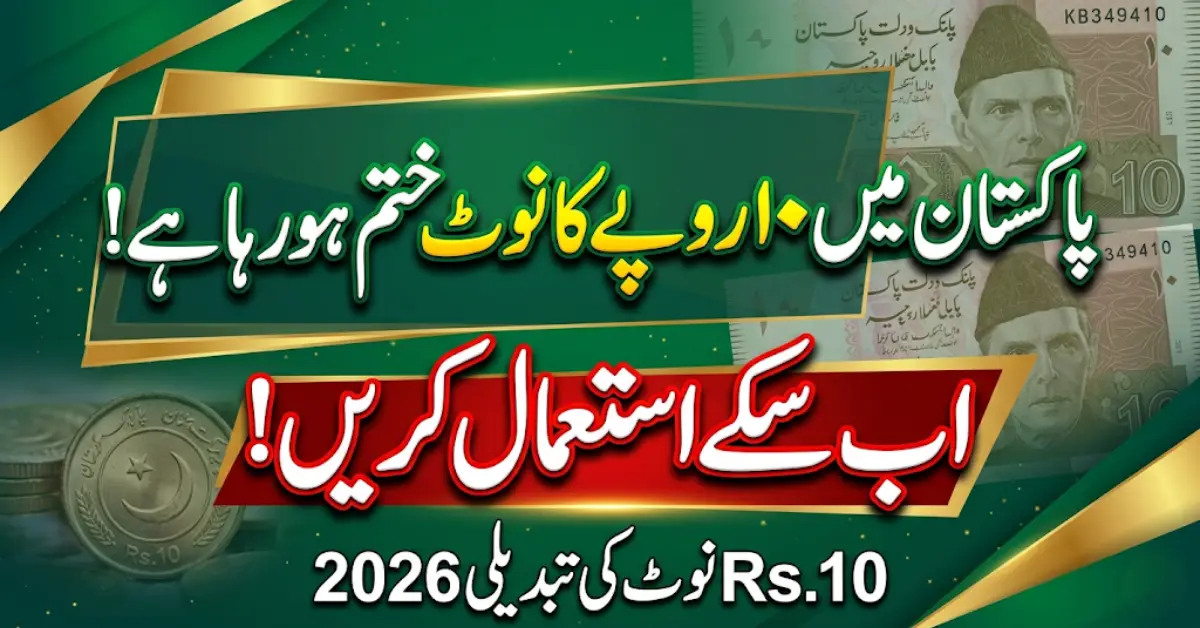
The Government of Pakistan has announced a gradual phase-out of the Rs.10 currency note phase-out Pakistan 2026, signaling a significant change in the country’s cash circulation system. This move, led by the State Bank of Pakistan, is part of broader monetary reforms aimed at improving the durability of currency and encouraging modern payment methods across the nation. Citizens and businesses alike are preparing for this transition, which will primarily affect low-value transactions. Rs.10 currency note phase-out Pakistan 2026
Why the Rs.10 currency note phase-out Pakistan 2026 Currency Note Is Being Discontinued
The Rs.10 note has been a staple of daily transactions for decades. However, rising printing costs and rapid deterioration of paper currency have made it increasingly impractical to maintain. Key reasons behind the decision include: Rs.10 currency note phase-out Pakistan 2026
- High production and replacement costs for paper notes.
- Rapid wear and tear, requiring frequent printing.
- Growing adoption of digital payments across urban and semi-urban areas.
- Introduction of durable coin alternatives for small denominations.
Experts suggest that moving to coins reduces long-term government expenditure while providing a longer-lasting solution for everyday transactions.
What Will Replace the Rs.10 currency note phase-out Pakistan 2026 Currency Note?
The State Bank of Pakistan is expected to expand the use of the Rs.10 coin, which is already in circulation but less commonly used compared to the paper note. Anticipated changes include:
- Wider availability of Rs.10 coins nationwide in banks and marketplaces.
- Gradual withdrawal of old Rs.10 notes from financial institutions.
- Continued acceptance of existing notes until the official deadline is announced.
Citizens can still use their Rs.10 notes during the transition, but the focus will gradually shift toward coins.
Impact on Daily Transactions
The discontinuation of the Rs.10 note will mostly affect small cash payments, including:
- Public transport fares
- Minor retail and grocery purchases
- Local market payments
- School canteen fees and utility bills
Authorities believe the transition will be smooth because coins are more durable, ensuring fewer disruptions in everyday commerce.

Shift Toward Digital Payments in Pakistan
This initiative aligns with Pakistan’s broader strategy to modernize financial services. The government and the State Bank of Pakistan are promoting:
- Mobile banking applications
- Branchless banking systems
- QR code-based payment solutions
Encouraging digital transactions reduces reliance on fragile paper currency and promotes efficiency, particularly in urban areas.
What Citizens Should Do Now
There is no immediate action required, but citizens are advised to:

- Continue using Rs.10 notes as usual.
- Deposit damaged or worn-out notes at banks when possible.
- Accept Rs.10 coins in daily transactions.
- Stay updated on official announcements regarding deadlines for note exchanges.
Banks will remain receptive to old Rs.10 notes during the transition phase, giving ample time for adjustment.
Final Outlook
The planned Rs.10 currency note phase-out Pakistan 2026 reflects Pakistan’s evolving approach to currency management in 2026. By replacing short-lived paper notes with durable coins and promoting digital payments, the government aims to reduce operational costs while improving convenience in daily transactions. Citizens are encouraged to adapt gradually and take advantage of modern financial tools for smoother day-to-day transactions.
FAQs for Rs.10 currency note phase-out Pakistan 2026
Q1: When will the Rs.10 note officially be withdrawn?
The exact deadline has not been announced yet. Citizens should follow official updates from the State Bank of Pakistan.

Q2: Can I still use old Rs.10 notes in 2026?
Yes, old Rs.10 notes will remain valid until the official exchange deadline is set.
Q3: Will banks accept worn-out Rs.10 notes?
Yes, banks are expected to accept damaged notes for deposit during the transition period.
Q4: Why is Pakistan shifting from notes to coins?
Coins are more durable and cost-effective for the government, especially for small denominations that circulate frequently.

Q5: How does this affect digital payments in Pakistan?
The transition supports a broader move toward digital transactions, making mobile and branchless banking more convenient for small payments.