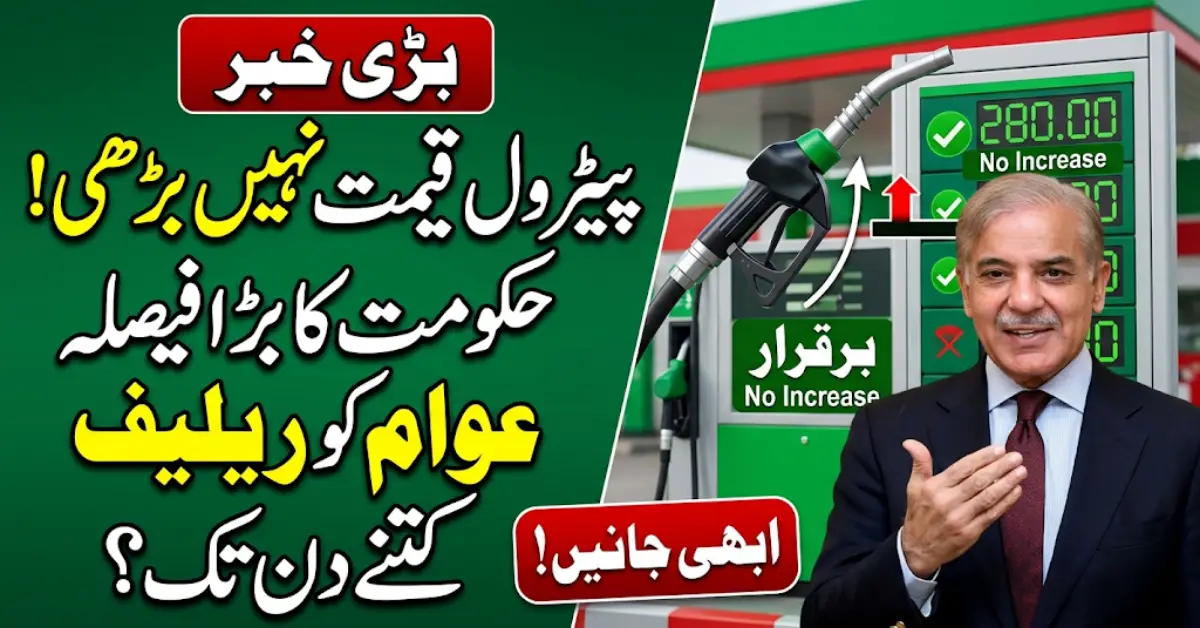
In a major relief-oriented move, Prime Minister Shehbaz Sharif has decided not to increase Petrol Price Relief despite rising global oil rates. This announcement has come as welcome news for millions of Pakistanis already dealing with inflation and rising living costs.
The decision reflects the government’s focus on public welfare and economic stability, especially for low- and middle-income households. Petrol Price Relief
Petrol Price Relief for the Common Man
The choice to keep fuel prices unchanged is aimed at reducing financial pressure on ordinary citizens. Petrol and diesel prices directly affect transportation, food costs, and daily expenses.
By maintaining current rates, the government is offering temporary stability at a time when international oil markets remain unpredictable. This step is especially beneficial for commuters, small business owners, and transport sectors.
Economic Challenges and Government Strategy
Pakistan is currently facing economic challenges due to global inflation and regional uncertainties. Rising crude oil prices in the international market have made it difficult for many countries to control fuel costs.
However, the government has taken proactive steps such as:

Cost Control Measures
Efforts are being made to reduce unnecessary government spending and improve financial discipline.
Policy Planning
Strategic planning and timely decisions have helped prevent a sudden increase in petroleum prices.
These measures aim to balance economic pressures while protecting citizens from additional burdens.
Strong Federal and Provincial Coordination
Another key factor behind this decision is effective coordination between federal and provincial governments.
All provinces are working together to:
- Reduce non-essential expenditures
- Support national economic policies
- Ensure uniform petroleum pricing across the country
This coordination helps avoid regional price differences and maintains consistency nationwide.
Ensuring Adequate Oil Supply
The government has also confirmed that Pakistan has sufficient crude oil reserves to meet current demand.
Through diplomatic efforts and supply management:
- Fuel shortages are being avoided
- Market stability is being maintained
- Price manipulation risks are minimized
This ensures that citizens do not face supply disruptions along with price hikes.
Government’s Commitment to Public Welfare
Prime Minister Shehbaz Sharif has reiterated that protecting the public remains his top priority. The government is focusing on:

- Supporting low-income families
- Reducing economic pressure on the middle class
- Implementing reforms to control inflation
This petrol price relief is part of broader efforts to stabilize the economy and provide ease to citizens.
Outlook on Petrol Price Relief
While global oil markets are still volatile, the government remains optimistic. Officials are closely monitoring international trends and will continue making decisions in the public’s best interest.
If global prices stabilize, Pakistan may see further relief in the future. For now, maintaining current fuel prices is a strong step toward economic balance.
FAQs for Petrol Price Relief
1. Why were petrol prices not increased?
To reduce financial pressure on citizens despite rising global oil prices.

2. Will petrol prices stay the same in the future?
Prices depend on global oil trends, but the government aims to maintain stability.
3. Who benefits from this decision?
All citizens, especially middle- and lower-income groups, transporters, and businesses.
4. Is there enough fuel supply in Pakistan?

Yes, the government has ensured adequate crude oil availability.
5. What is the government’s long-term plan?
To control inflation, manage expenses, and provide relief to the public.